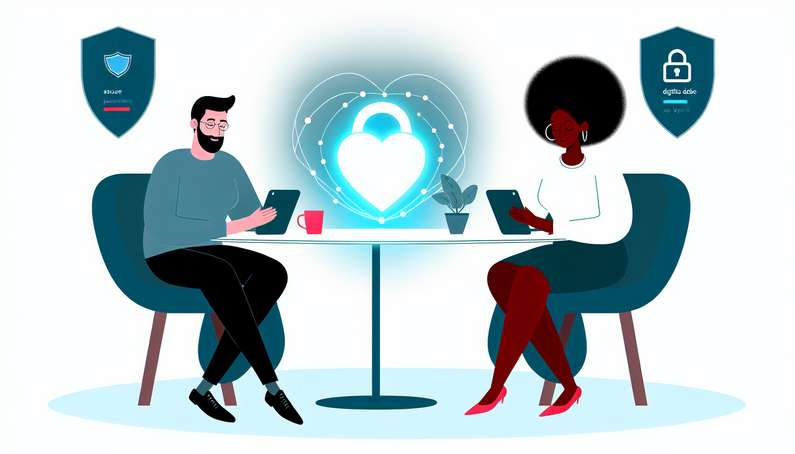
Bitwarden’s Cupid Vault: Secure, User-Friendly Password Sharing for Everyday Life

Sharing passwords is often a necessary evil—think couples managing streaming accounts or families juggling online bills. Yet, the methods people use (like texting or emailing credentials) are notoriously risky, leaving sensitive data exposed to prying eyes or accidental leaks. Bitwarden’s new ‘Cupid Vault’ aims to rewrite this narrative by offering a secure, user-friendly way to share passwords without sacrificing privacy or ease of use.
Cupid Vault leverages end-to-end encryption, ensuring that even Bitwarden’s own servers can’t peek at your secrets. The system’s design isolates shared vaults from personal ones, so your private credentials stay private, and shared items are only accessible to those you explicitly trust. With a streamlined onboarding process, email-based invitations, and real-time synchronization, Bitwarden makes secure sharing accessible—even for those who aren’t tech-savvy (BleepingComputer).
This approach comes at a time when password-related breaches are making headlines, and the stakes for digital security have never been higher. Cupid Vault’s blend of robust cryptography, intuitive management, and thoughtful access controls offers a timely solution for individuals and small groups who need to collaborate securely online.
How Cupid Vault Makes Password Sharing Secure (and Actually User-Friendly)
End-to-End Encryption: Ensuring Confidentiality at Every Step
Bitwarden’s Cupid Vault leverages the platform’s robust end-to-end encryption to safeguard shared credentials throughout the sharing process. All data stored and transmitted within the Cupid Vault is encrypted using strong cryptographic algorithms before it ever leaves the user’s device, ensuring that even Bitwarden’s own servers cannot access the plaintext contents of shared passwords or sensitive information (BleepingComputer). This approach eliminates the risk of interception or unauthorized access during transmission, a critical concern in password sharing scenarios.
Unlike traditional password sharing methods—such as sending credentials via email, messaging apps, or text, which expose passwords to potential interception—Cupid Vault’s encrypted sharing mechanism ensures that only the intended recipient, who is authenticated and authorized within the Bitwarden ecosystem, can decrypt and access the shared secrets. This not only protects against external threats but also mitigates risks associated with insider attacks, as no intermediary (including Bitwarden itself) can view the shared data.
The encryption model is further strengthened by the isolation of the shared Organization vault from users’ personal vaults, preventing accidental or unauthorized cross-access. This compartmentalization is essential for maintaining the integrity and confidentiality of both personal and shared credentials.
Controlled Access Through Email-Based Invitations and Role Management
Cupid Vault introduces a straightforward, email-based invitation system for adding trusted individuals to a shared vault, referred to as an “Organization.” This process is designed to be both secure and user-friendly, reducing friction for non-technical users while maintaining strict access controls (BleepingComputer). The vault owner initiates sharing by sending an invitation to the recipient’s email address. Once accepted, the recipient gains access to the Organization vault, where they can view and manage shared credentials.
To further enhance security, Bitwarden incorporates a fingerprint phrase verification step. This allows the vault owner to confirm the identity of the invitee, mitigating the risk of adversary-in-the-middle enrollment attacks. By requiring both parties to verify a unique fingerprint phrase, the system ensures that only the intended recipient is granted access, significantly reducing the likelihood of unauthorized entry.
Role management within the Cupid Vault is intentionally streamlined for the free tier, limiting each Organization to two users. Both users are granted equal permissions to add, edit, or delete items within the shared vault. This approach simplifies collaboration and reduces the complexity of managing granular permissions, making the system accessible to individuals and small groups without sacrificing security.
Isolation and Revocation: Fine-Grained Control Over Shared Secrets
Cupid Vault’s architecture emphasizes the principle of least privilege and compartmentalization by isolating the shared Organization vault from each user’s personal vault. This means that credentials shared within the Organization are not accessible from outside the shared space, and vice versa. Such isolation is critical in preventing accidental leaks or unauthorized access to sensitive information that is not intended for sharing.
Access to the Organization vault can be revoked at any time by the vault owner. This immediate revocation capability is essential in scenarios where trust relationships change or when a device is lost or compromised. The ability to instantly remove a user from the shared vault ensures that former collaborators or compromised accounts cannot continue to access sensitive credentials.
Additionally, sharing can be configured in both directions, allowing either member of the Organization to contribute or remove items from the shared vault. This bidirectional sharing model promotes collaboration while maintaining strict boundaries between shared and personal data.
User Experience: Streamlined Onboarding and Intuitive Management
One of Cupid Vault’s standout features is its focus on usability, making secure password sharing accessible to a broad audience, including those without technical expertise. Setting up a shared vault is accomplished through the Bitwarden web interface, where users can create an Organization, establish Collections (groups of credentials), and invite a second user—all within a few guided steps (BleepingComputer).
The onboarding process is designed to minimize confusion and errors. Visual cues and step-by-step instructions guide users through creating an Organization, setting up Collections, and managing invitations. The use of familiar concepts such as email invitations and simple permission models reduces the learning curve, allowing users to focus on collaboration rather than technical configuration.
Once the Organization is established, both users can easily add, edit, or remove credentials from the shared Collections. Changes are synchronized in real time, ensuring that both parties always have access to the latest information. This real-time synchronization is particularly valuable for couples, families, or small teams who need to coordinate access to shared accounts, such as streaming services, financial platforms, or household utilities.
Bitwarden also provides a detailed online guide to assist users in setting up and managing Cupid Vault, further lowering barriers to adoption and ensuring that best practices are followed throughout the sharing process (Bitwarden Guide).
Security Beyond Sharing: Additional Safeguards and Best Practices
While Cupid Vault’s core features address the fundamental challenges of secure password sharing, the system also incorporates additional safeguards to enhance overall security posture. For example, all actions within the Organization vault are logged and auditable, providing transparency and accountability for shared credential management. This auditability is crucial for detecting unauthorized changes or potential misuse within the shared vault.
Bitwarden encourages users to adopt best practices such as using strong, unique passwords for each shared account and enabling two-factor authentication (2FA) wherever possible. Although Cupid Vault is designed for simplicity, it does not compromise on these essential security principles. Users are reminded to verify invitations and fingerprint phrases carefully, and to promptly revoke access if a device is lost or a user’s status changes.
Furthermore, the Cupid Vault feature is intentionally limited to two users and two Collections in the free tier, reducing the attack surface and minimizing the risk of accidental oversharing. For larger groups or organizations requiring more advanced sharing capabilities, Bitwarden’s paid plans offer expanded features such as multiple users, granular role-based access controls, and advanced audit logs, ensuring that security scales with organizational needs (BleepingComputer).
In summary, Cupid Vault’s design reflects a careful balance between security and usability. By combining end-to-end encryption, controlled access, isolation, intuitive management, and additional safeguards, Bitwarden delivers a password sharing solution that is both secure and genuinely user-friendly, addressing the needs of individuals and small groups without compromising on protection or ease of use.
Final Thoughts
Bitwarden’s Cupid Vault stands out as a thoughtful response to the real-world challenges of password sharing. By combining strong end-to-end encryption, simple yet effective access controls, and a focus on user experience, it bridges the gap between security and convenience. The feature’s limitations—such as the two-user cap in the free tier—aren’t just about upselling; they’re a deliberate move to minimize risk and keep things manageable for everyday users (BleepingComputer).
As cyber threats evolve and attackers exploit even the smallest lapses in digital hygiene, tools like Cupid Vault are essential. They empower users to collaborate safely, whether sharing a Netflix password or managing joint finances, without resorting to risky workarounds. For anyone tired of the anxiety that comes with sharing sensitive information, Bitwarden’s latest innovation is a welcome—and timely—upgrade.
References
- Bitwarden introduces ‘Cupid Vault’ for secure password sharing. (2024). BleepingComputer. https://www.bleepingcomputer.com/news/security/bitwarden-introduces-cupid-vault-for-secure-password-sharing/