
Preserving the American Archive of Public Broadcasting: Challenges and Imperatives

Imagine a treasure trove of American stories, voices, and moments—over 100,000 hours of radio and television broadcasts—preserved in a single archive. The American Archive of Public Broadcasting (AAPB), a partnership between the Library of Congress and WGBH, is exactly that: a living record of U.S. culture stretching back to the 1940s (Library of Congress). Yet, this vast collection faces a race against time. Outdated media formats like VHS and reel-to-reel tapes are deteriorating, and the machines needed to play them are vanishing from existence (Smithsonian Institution). Digitization efforts are underway, but the process is slow, expensive, and fraught with legal and technical hurdles. Copyright ambiguities, funding shortfalls, and the ever-present risk of digital obsolescence add further complexity (Digital Preservation Coalition; Copyright Alliance). The stakes are high: losing access to these broadcasts would mean erasing irreplaceable chapters of American history (American Historical Association).
Nature of the Vulnerability
Historical Context of the Archive
The American Archive of Public Broadcasting (AAPB) is a collaborative effort between the Library of Congress and WGBH Educational Foundation. Established to preserve public media content, the archive holds over 100,000 hours of programming from more than 120 public broadcasting organizations across the United States. This extensive collection, dating back to the 1940s, includes radio and television broadcasts, providing a rich historical record of American culture and society. The vulnerability of such an archive lies in its reliance on outdated media formats, which are susceptible to degradation over time. As technology evolves, the equipment needed to play these formats becomes scarce, posing a significant risk to the preservation of this valuable content (Library of Congress).
Technological Vulnerabilities
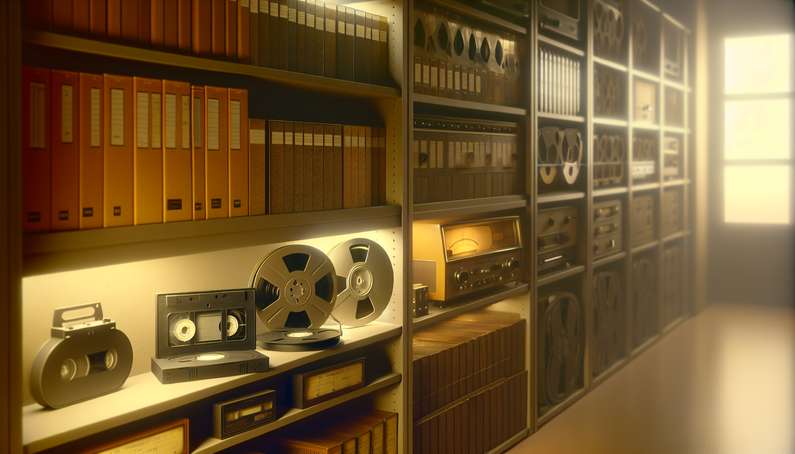
The primary technological vulnerability of the AAPB stems from the obsolescence of media formats and playback devices. Many of the archived materials are stored on formats such as VHS, Betacam, and reel-to-reel tapes, which are prone to deterioration. Magnetic tape, for instance, can suffer from “sticky-shed syndrome,” where the binder holding the magnetic particles deteriorates, rendering the tape unplayable. Additionally, the hardware required to play these formats is no longer in production, and existing devices are becoming increasingly rare and difficult to maintain (Smithsonian Institution).
Efforts to digitize the archive are underway, but the process is time-consuming and resource-intensive. The sheer volume of content, coupled with the need for specialized equipment and expertise, presents a formidable challenge. Furthermore, digital preservation itself is not without risks, as digital formats can become obsolete, and data corruption or loss can occur without proper management and redundancy measures (Digital Preservation Coalition).
Legal and Copyright Challenges
The AAPB faces significant legal and copyright challenges that complicate its mission to preserve and provide access to public broadcasting content. Many of the programs in the archive were created before the digital age, and their rights holders may be difficult to identify or contact. This uncertainty can hinder efforts to digitize and distribute the content, as the risk of infringing on intellectual property rights is a major concern (Copyright Alliance).
In some cases, the original contracts or agreements governing the use of the content may not explicitly cover digital distribution, necessitating renegotiation or legal interpretation. Additionally, the archive must navigate a complex landscape of state and federal laws, as well as international treaties, when dealing with content that originated from or is distributed in other countries (World Intellectual Property Organization).
Financial Constraints and Resource Allocation
The financial constraints faced by the AAPB are a critical aspect of its vulnerability. Funding for public broadcasting and archival efforts is often limited, and the costs associated with preserving and digitizing the archive are substantial. This includes expenses for specialized equipment, skilled personnel, and the infrastructure needed to store and manage digital files (Public Broadcasting Service).
Securing sustainable funding is a persistent challenge, as the archive competes with other public broadcasting initiatives and cultural preservation projects for limited resources. The reliance on grants and donations can lead to uncertainty and fluctuations in available funding, impacting the archive’s ability to plan and execute long-term preservation strategies (National Endowment for the Humanities).
Implications for Cultural Heritage and Public Access
The vulnerabilities of the AAPB have significant implications for cultural heritage and public access to historical media content. The archive serves as a vital resource for researchers, educators, and the public, offering insights into the social, political, and cultural history of the United States. The loss or inaccessibility of this content would represent a substantial gap in the historical record, depriving future generations of valuable knowledge and context (American Historical Association).
Efforts to address these vulnerabilities are crucial to ensuring that the archive remains a living resource. This includes ongoing digitization initiatives, legal advocacy for clearer copyright frameworks, and the development of sustainable funding models. By overcoming these challenges, the AAPB can continue to fulfill its mission of preserving and providing access to the nation’s public broadcasting heritage (Association of Moving Image Archivists).
Final Thoughts
The vulnerabilities facing the American Archive of Public Broadcasting are a microcosm of the broader challenges in preserving digital and analog heritage. Without urgent action—accelerated digitization, legal reform, and sustainable funding—decades of public broadcasting could fade into obscurity (Association of Moving Image Archivists). The AAPB’s struggle is not just about technology or law; it’s about safeguarding the collective memory of a nation. As emerging technologies like AI offer new tools for restoration and access, they also introduce fresh risks and ethical questions. The future of the archive depends on a collaborative, innovative approach that values both preservation and public access (National Endowment for the Humanities).
References
- Library of Congress. (n.d.). American Archive of Public Broadcasting. https://www.loc.gov
- Smithsonian Institution. (n.d.). Preserving obsolete media formats. https://www.si.edu
- Digital Preservation Coalition. (n.d.). Digital preservation challenges. https://www.dpconline.org
- Copyright Alliance. (n.d.). Copyright and digitization. https://copyrightalliance.org
- World Intellectual Property Organization. (n.d.). International copyright law. https://www.wipo.int
- Public Broadcasting Service. (n.d.). Funding public broadcasting. https://www.pbs.org
- National Endowment for the Humanities. (n.d.). Grants for preservation. https://www.neh.gov
- American Historical Association. (n.d.). The importance of historical archives. https://www.historians.org
- Association of Moving Image Archivists. (n.d.). Moving image preservation. https://www.amianet.org




