
How Cybercriminals Stole $262 Million by Impersonating Bank Support Teams in 2025

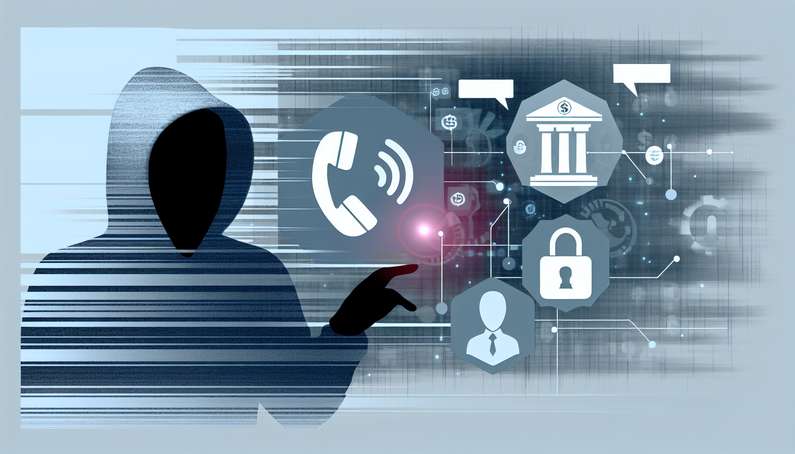
Picture this: you receive a call from someone claiming to be your bank’s support team, warning you about suspicious activity on your account. The urgency in their voice, the official-sounding language, and even the caller ID all seem legitimate. Before you know it, you’ve handed over sensitive information—only to discover later that you’ve become part of a staggering $262 million cybercrime wave targeting bank customers in 2025 (BleepingComputer).
This isn’t a plot from a cyber-thriller; it’s the reality facing thousands of individuals and businesses. Cybercriminals are no longer just exploiting software vulnerabilities—they’re mastering the art of social engineering, manipulating human psychology to bypass even the most advanced security systems. Their arsenal includes everything from real-time phishing sites and SEO manipulation to cryptocurrency laundering, all designed to outsmart both technology and people. The FBI’s Internet Crime Complaint Center (IC3) has documented over 5,100 complaints tied to these schemes, highlighting just how widespread and sophisticated these attacks have become (BleepingComputer).
This comprehensive analysis unpacks the tactics, technologies, and psychological tricks behind these high-stakes heists, offering insights for both cybersecurity professionals and everyday users.
How Cybercriminals Outsmarted Banks: Tactics, Tech, and the Human Factor
Exploiting Social Engineering to Circumvent Security Protocols
Cybercriminals have demonstrated a sophisticated understanding of human psychology, leveraging social engineering to bypass even the most robust technical safeguards deployed by financial institutions. Unlike traditional hacking, which targets technological vulnerabilities, social engineering exploits the trust and behavior of individuals. Attackers pose as legitimate bank support staff, often reaching out via phone calls, SMS, or emails that appear authentic. These communications are meticulously crafted to instill urgency or fear, prompting victims to reveal sensitive information such as login credentials, account numbers, or multi-factor authentication (MFA) codes.
In numerous cases reported to the FBI’s Internet Crime Complaint Center (IC3), cybercriminals have convinced victims that their accounts were at risk due to suspicious activity, sometimes even fabricating stories about unauthorized firearm purchases to heighten anxiety (BleepingComputer). By manipulating emotional responses, attackers effectively bypass technological barriers, gaining access to accounts without triggering traditional security alerts.
This reliance on social engineering underscores a critical vulnerability: even the most advanced security systems can be rendered ineffective if users are deceived into granting access. The human factor remains the weakest link, and cybercriminals have refined their tactics to exploit this with alarming efficiency.
Advanced Phishing Infrastructure and SEO Manipulation
A key component of recent account takeover (ATO) schemes is the deployment of highly convincing phishing websites. These sites are engineered to mimic the appearance and functionality of legitimate banking or payroll portals, often copying branding, design elements, and even security disclaimers. Victims are lured to these fraudulent sites through direct links in emails or SMS messages, but increasingly, attackers are leveraging search engine optimization (SEO) poisoning.
SEO poisoning involves manipulating search engine algorithms so that malicious websites appear at the top of search results for queries related to banking or customer support. Attackers purchase ads or exploit trending keywords, making it more likely that a victim searching for their bank’s support page will land on a phishing site instead of the legitimate one (BleepingComputer). Once on the site, victims are prompted to enter their credentials, which are harvested in real time and used to initiate unauthorized transactions.
This tactic represents a significant evolution in phishing methodology. Rather than relying solely on direct communication, cybercriminals now intercept victims at the point of self-initiated contact with their financial institutions, exploiting the trust placed in search engine results and the familiarity of the bank’s online presence.
Real-Time Credential Harvesting and Session Hijacking
Modern cybercriminal operations have adopted real-time credential harvesting techniques, enabling them to act within moments of a victim entering their information on a phishing site. Unlike older phishing campaigns that collected credentials for later use, these attacks often involve live monitoring by the perpetrators. As soon as a victim submits their username, password, or MFA code, the attackers immediately use this information to log in to the legitimate banking site, sometimes even initiating a password reset to lock out the rightful account owner.
This real-time approach is particularly effective against MFA protections. When prompted for a one-time passcode (OTP), victims often receive a legitimate code from their bank and, believing they are interacting with authorized support staff, relay it to the attackers. The criminals then use the OTP to complete the login process, rendering MFA ineffective in these scenarios (BleepingComputer).
Session hijacking may also be employed, where attackers use stolen session cookies or tokens to bypass authentication entirely. This technique allows them to maintain access even after the victim changes their password, further complicating efforts to regain control and recover stolen funds.
Leveraging Cryptocurrency for Rapid Fund Laundering
Once access is obtained, cybercriminals waste no time in transferring stolen funds. According to the FBI, the majority of illicit transfers are routed through cryptocurrency wallets controlled by the perpetrators. The use of cryptocurrency offers several advantages: transactions are processed rapidly, are difficult to reverse, and provide a degree of anonymity that complicates law enforcement efforts (BleepingComputer).
Funds are typically moved through a series of wallets and exchanges, often crossing international borders within minutes. This rapid disbursement makes it exceedingly difficult for banks or authorities to recall transactions or freeze assets. In many cases, by the time the victim or their financial institution becomes aware of the fraud, the money has already been laundered through multiple channels, effectively disappearing into the global cryptocurrency ecosystem.
The sophistication of these laundering operations highlights a critical challenge for both banks and regulators. Traditional anti-money laundering (AML) controls are often ill-equipped to track the flow of digital assets, and the decentralized nature of cryptocurrency markets provides fertile ground for illicit activity.
Adaptive Attack Strategies and Continuous Evolution
Cybercriminals have demonstrated remarkable adaptability, continuously refining their tactics to stay ahead of both technological defenses and user awareness campaigns. As banks introduce new security features—such as biometric authentication, behavioral analytics, or enhanced fraud detection—attackers quickly study and circumvent these measures.
For example, when banks began requiring MFA, criminals shifted to real-time phishing and social engineering to capture OTPs. As awareness of phishing increased, attackers adopted SEO poisoning and malvertising to reach victims outside traditional communication channels. Some groups have even begun impersonating law enforcement agencies, such as the FBI’s own IC3, to add legitimacy to their scams and further confuse targets (BleepingComputer).
This continuous evolution is fueled by the sharing of tactics, techniques, and procedures (TTPs) within cybercriminal communities. Forums and marketplaces on the dark web facilitate the exchange of phishing kits, malware, and even “as-a-service” offerings, lowering the barrier to entry for less technically skilled actors. The result is a dynamic threat landscape in which defensive measures are perpetually playing catch-up.
The scale of the problem is underscored by the numbers: in 2025 alone, over $262 million was stolen in ATO attacks involving impersonation of bank support teams, with more than 5,100 complaints filed with the IC3 (BleepingComputer). This figure likely represents only a fraction of the true impact, as many incidents go unreported.
Psychological Manipulation and the Erosion of Trust
Beyond technical prowess, the most insidious weapon in the cybercriminal arsenal is the deliberate erosion of trust between banks and their customers. By successfully impersonating bank personnel and, in some cases, law enforcement, attackers undermine confidence in official communications and support channels.
Victims often report feeling betrayed not only by the criminals but also by the institutions they believed were protecting them. This psychological toll can have long-lasting effects, leading to reluctance in engaging with digital banking services or skepticism toward legitimate security measures. The reputational damage to financial institutions is significant, as each successful attack chips away at the perceived reliability of online banking.
Cybercriminals exploit this erosion of trust to further their schemes. For example, after a successful compromise, they may reach out to additional victims within the same organization or social circle, leveraging the initial breach to gain credibility. This ripple effect amplifies the impact of each attack, making recovery and remediation even more challenging.
The interplay between psychological manipulation and technological exploitation is at the heart of modern ATO fraud. As banks and regulators seek to bolster defenses, addressing the human factor—through education, awareness, and user-centric security design—remains a critical, yet often underemphasized, component of the broader response strategy.
Final Thoughts
The $262 million stolen by cybercriminals impersonating bank support teams in 2025 is more than just a headline—it’s a wake-up call for the entire financial ecosystem. These attacks reveal that even the most robust technical defenses can be undone by a well-crafted email, a convincing phone call, or a cleverly placed phishing site (BleepingComputer).
As attackers continue to evolve—leveraging real-time credential harvesting, cryptocurrency laundering, and SEO poisoning—defenders must adapt just as quickly. This means not only investing in cutting-edge security technologies but also prioritizing user education, psychological resilience, and trust-building. After all, the human factor remains both the greatest vulnerability and the strongest line of defense.
Staying ahead in this cat-and-mouse game requires vigilance, collaboration, and a willingness to learn from each new incident. By understanding the tactics and motivations of cybercriminals, we can better protect our digital lives and restore confidence in the systems we rely on every day.
References
- FBI: Cybercriminals stole $262 million by impersonating bank support teams since January. (2025). BleepingComputer. https://www.bleepingcomputer.com/news/security/fbi-cybercriminals-stole-262-million-by-impersonating-bank-support-teams-since-january/




