How ClickFix Outsmarts Users and Security Tools with Stealthy Malware Delivery

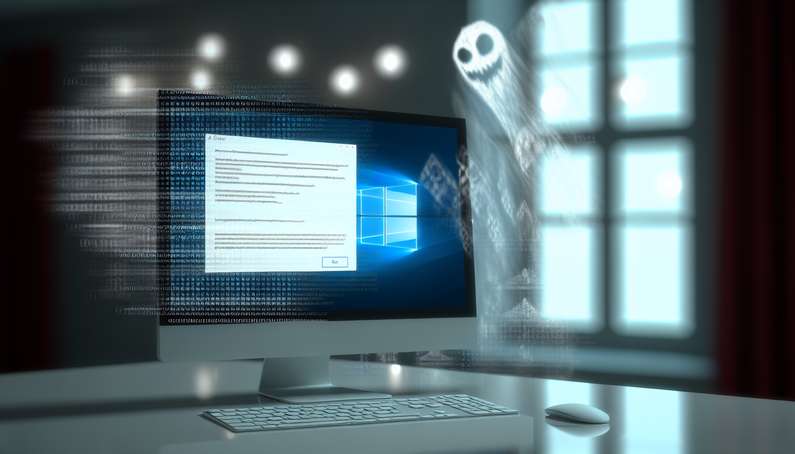
Imagine sitting at your computer, greeted by what looks like a routine Windows Update screen—complete with familiar branding and convincing animations. But behind this façade lurks ClickFix, a sophisticated attack that turns user trust into its greatest weapon. By blending psychological manipulation with technical wizardry, ClickFix tricks even seasoned users into running malicious commands, all under the guise of a legitimate update (BleepingComputer).
What sets ClickFix apart isn’t just its visual deception. The attack chain leverages steganography—hiding malware inside innocent-looking PNG images—and executes payloads entirely in memory, leaving almost no trace for traditional antivirus tools to find. Recent campaigns have delivered notorious info-stealers like LummaC2 and Rhadamanthys, targeting everything from browser cookies to cryptocurrency wallets. As attackers adapt quickly, shifting infrastructure and tactics, defenders are left racing to keep up in a high-stakes game of digital cat and mouse (BleepingComputer).
How ClickFix’s Stealthy Malware Delivery Outsmarts Users and Security Tools
Social Engineering Tactics That Bypass User Vigilance
ClickFix attacks have demonstrated exceptional effectiveness by leveraging advanced social engineering techniques that exploit user trust in familiar system processes. The attackers craft highly convincing full-screen browser pages that mimic the official Windows Update interface, complete with realistic animations and branding. This visual deception is designed to lower the guard of even experienced users, who may believe they are interacting with a legitimate system prompt (BleepingComputer).
A critical element of the attack is the use of interactive instructions that prompt users to perform specific actions, such as pressing a sequence of keys or pasting commands into the Windows Command Prompt. These instructions are tailored to appear as necessary steps to complete a security update or pass a “human verification” check. The attackers exploit the psychological pressure of urgency and authority, common in official update notifications, to coerce users into executing malicious code themselves.
Unlike traditional phishing, which often relies on users clicking malicious links or downloading suspicious attachments, ClickFix shifts the onus of execution onto the user, making detection by standard anti-phishing tools less likely. The attack further employs JavaScript to automatically copy harmful commands to the clipboard, streamlining the process and reducing the likelihood of user suspicion (BleepingComputer). This approach has contributed to the widespread adoption of ClickFix tactics across various cybercriminal groups, as it consistently achieves high infection rates.
Steganographic Techniques Concealing Malicious Payloads
A defining feature of recent ClickFix campaigns is the use of steganography to hide malware within seemingly innocuous image files. Rather than appending malicious code to the end of a file—a method often flagged by security tools—the attackers embed the payload directly into the pixel data of PNG images. This is accomplished by manipulating specific color channels to encode encrypted data, which is later reconstructed and decrypted in memory during the attack process (BleepingComputer).
The initial delivery mechanism involves the use of the legitimate Windows-native binary mshta.exe to execute malicious JavaScript code. This code, in turn, launches a multi-stage process involving PowerShell scripts and a .NET assembly known as the “Stego Loader.” The Stego Loader is responsible for extracting an AES-encrypted blob from its manifest resources, which contains the steganographically embedded shellcode. Custom C# routines are then used to reconstruct and decrypt the payload, allowing it to execute entirely in memory without ever being written to disk.
This sophisticated method of embedding and delivering malware makes detection by traditional signature-based antivirus solutions extremely challenging. Security tools that rely on scanning files for known malicious patterns are unlikely to identify threats hidden within the pixel data of images, especially when the images themselves appear legitimate and unaltered to the naked eye. As a result, ClickFix’s use of steganography represents a significant advancement in malware evasion tactics.
In-Memory Execution and Fileless Persistence
ClickFix attacks are notable for their reliance on in-memory execution, a technique that allows malware to operate without leaving artifacts on the file system. After the Stego Loader reconstructs the decrypted shellcode from the PNG image, the payload is executed directly in memory. This approach is facilitated by tools such as Donut, which can pack and execute various types of code—including VBScript, JScript, EXE, DLL files, and .NET assemblies—without requiring persistent files on disk (BleepingComputer).
The fileless nature of the attack significantly complicates forensic analysis and incident response. Without files to scan or quarantine, endpoint detection and response (EDR) tools must rely on behavioral analysis and memory inspection to identify malicious activity. However, ClickFix further obfuscates its presence by employing dynamic evasion techniques, such as the “ctrampoline” method, in which the entry point function initiates a chain of 10,000 empty function calls before executing the actual malicious code. This tactic is designed to frustrate automated analysis and delay detection by security software.
Moreover, the attack chain often involves legitimate system processes, such as explorer.exe spawning mshta.exe or PowerShell, making it difficult to distinguish malicious activity from normal system operations. This blending with trusted processes allows ClickFix malware to persist and operate undetected for extended periods, increasing the likelihood of successful data exfiltration or further compromise.
Advanced Payloads: LummaC2 and Rhadamanthys Information Stealers
Recent ClickFix campaigns have been observed deploying advanced information-stealing malware, notably LummaC2 and Rhadamanthys. These payloads are engineered to harvest sensitive data from infected systems, including credentials, browser cookies, cryptocurrency wallets, and other valuable information (BleepingComputer).
LummaC2 is a modular infostealer known for its rapid development cycle and frequent updates, which enable it to evade detection by adapting to new security measures. It is capable of exfiltrating a wide range of data types and communicating with command-and-control (C2) servers using encrypted channels. Rhadamanthys, on the other hand, is recognized for its stealthy operation and robust anti-analysis features, including code obfuscation and sandbox evasion.
The deployment of these payloads via ClickFix attacks illustrates the increasing sophistication of cybercriminal operations. By combining social engineering, steganography, in-memory execution, and advanced infostealers, attackers maximize the chances of successful infection and data theft. Notably, the infrastructure supporting these campaigns is resilient, with attackers quickly shifting to new domains and distribution methods in response to law enforcement takedowns, as evidenced by the continued activity following Operation Endgame (BleepingComputer).
Evasion of Security Monitoring and Incident Response
ClickFix’s multi-layered approach to evading detection extends beyond technical obfuscation to include tactics that hinder security monitoring and incident response. The attack chain is designed to minimize observable indicators of compromise (IOCs), making it difficult for analysts to trace the origin and progression of the infection.
One notable evasion technique is the manipulation of process chains. For example, the attack may involve explorer.exe spawning mshta.exe or PowerShell, processes that are commonly used in legitimate administrative tasks. This process masquerading complicates the task of distinguishing malicious activity from routine operations, especially in environments where such processes are frequently invoked by IT staff or automated scripts.
Additionally, ClickFix attacks often leverage the Windows Run box, instructing users to execute commands that initiate the infection chain. Security researchers recommend monitoring the RunMRU registry key to detect suspicious command entries, but this requires proactive and continuous oversight, which may not be feasible in all organizations (BleepingComputer).
The use of encrypted communication channels and dynamic payload delivery further complicates detection. By encrypting both the payload and the communication with C2 servers, attackers prevent the interception and analysis of malicious traffic. The rapid evolution of ClickFix variants, with new lures and delivery mechanisms appearing regularly, ensures that static security controls are quickly rendered obsolete.
In summary, ClickFix’s stealthy malware delivery leverages a combination of psychological manipulation, technical obfuscation, and adaptive evasion tactics to outsmart both users and security tools. Its reliance on user interaction, steganographic payloads, in-memory execution, advanced infostealers, and sophisticated evasion techniques represents a significant challenge for defenders and underscores the need for continuous vigilance and advanced threat detection capabilities in modern security operations.
Final Thoughts
ClickFix is a masterclass in modern cyber deception, blending social engineering, technical stealth, and rapid adaptation to evade both users and security tools. Its use of fake Windows Update screens, steganographic payloads, and in-memory execution demonstrates just how far attackers will go to stay ahead of defenders. The deployment of advanced info-stealers like LummaC2 and Rhadamanthys only raises the stakes, as sensitive data becomes the ultimate prize (BleepingComputer).
For organizations and individuals alike, the lesson is clear: vigilance and layered security are more critical than ever. Monitoring for unusual process chains, educating users about social engineering, and investing in behavioral detection tools can help tip the balance. As cybercriminals continue to innovate, so too must our defenses—because the next fake update could be more than just an inconvenience; it could be the gateway to a major breach.
References
- Cimpanu, C. (2024, June 6). ClickFix attack uses fake Windows Update screen to push malware. BleepingComputer. https://www.bleepingcomputer.com/news/security/clickfix-attack-uses-fake-windows-update-screen-to-push-malware/