
How a Cyberattack Paralyzed Venezuela’s Oil Industry: Lessons from the 2025 PDVSA Breach

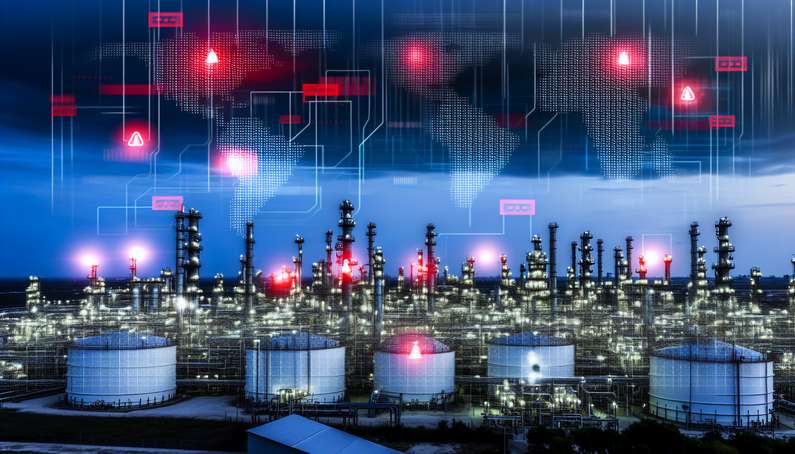
A single cyberattack can grind a nation’s most vital industry to a halt, as seen in the December 2025 breach of Venezuela’s state oil company, PDVSA. What began as an administrative inconvenience quickly escalated into a full-blown operational crisis, with internal memos urging staff to disconnect from networks and halt all computer activity. This wasn’t just a hiccup in the back office—PDVSA’s main crude oil terminal was forced offline, freezing cargo deliveries and threatening Venezuela’s already precarious economy (BleepingComputer).
The incident exposed the fragile digital backbone of the oil industry, where legacy systems and insufficient network segmentation can turn a targeted attack into a nationwide emergency. As the world watched, the shutdown rippled through global markets and geopolitical fault lines, with accusations flying and millions in revenue lost each day. This analysis unpacks how the PDVSA cyberattack unfolded, the vulnerabilities it revealed, and the lessons it offers for critical infrastructure operators everywhere.
How a Cyberattack Can Bring an Oil Giant to Its Knees: The PDVSA Case Study
Immediate Operational Disruption: From Administrative Breaches to Export Paralysis
The cyberattack against Petróleos de Venezuela, S.A. (PDVSA) in December 2025 demonstrates how a targeted digital assault can move rapidly from administrative inconvenience to full-scale operational paralysis. While PDVSA’s official statement initially claimed the breach was limited to administrative systems, multiple independent sources contradicted this narrative. According to Bloomberg, internal memos instructed both operational and administrative staff to disconnect from the network and shut down computers, indicating a far broader impact.
The most critical operational consequence was the shutdown of systems managing Venezuela’s main crude oil terminal. By Monday, days after the incident, these systems remained offline, halting all cargo deliveries. Reuters cited an inside source stating, “There’s no delivery (of cargoes), all systems are down.” The inability to process and fulfill export commitments not only disrupts immediate revenue streams but also damages the reliability and reputation of Venezuela as a global oil supplier.
This case underscores that, for oil giants, administrative IT systems are deeply intertwined with operational technology (OT). Disabling even non-production systems can trigger cascading effects, forcing the shutdown of critical infrastructure to prevent further spread of the attack or data corruption. In the PDVSA incident, the need to disconnect from networks and halt operations at the main terminal reveals the fragility of digital dependencies in oil logistics and exportation.
Vulnerabilities in Legacy Infrastructure and Network Segmentation
PDVSA, like many national oil companies, operates with a complex patchwork of legacy IT and OT systems. These systems, often decades old, lack modern security features and are difficult to patch without disrupting essential operations. The attack exposed the inherent risks of such environments, where administrative and operational networks may not be adequately segmented.
Effective network segmentation is a fundamental cybersecurity practice that limits the lateral movement of attackers. In PDVSA’s case, the attack’s ability to force both administrative and operational staff offline suggests that segmentation was either insufficient or bypassed. The result was a situation where a breach in one part of the network rapidly threatened the entire organization’s ability to function.
The oil industry’s reliance on industrial control systems (ICS) and supervisory control and data acquisition (SCADA) platforms, often running on outdated software, makes them particularly vulnerable. Attackers exploiting these weak points can gain access to critical systems that control everything from pipeline pressure to export scheduling. The PDVSA incident highlights the urgent need for oil giants to modernize infrastructure and implement robust segmentation strategies to contain breaches and protect core operations.
Economic and Geopolitical Ramifications of a Digital Shutdown
The financial implications of halting oil exports are immediate and severe for a country like Venezuela, where petroleum accounts for the vast majority of export revenue. Each day of export disruption translates to millions of dollars in lost income, exacerbating an already fragile economy. The timing of the PDVSA cyberattack, coming on the heels of U.S. authorities seizing a sanctioned oil tanker, further amplified geopolitical tensions (BleepingComputer).
PDVSA’s public response blamed the United States and “domestic conspirators” for orchestrating the attack, framing it as part of a broader strategy to undermine national stability and seize Venezuelan oil resources. This narrative demonstrates how cyberattacks on critical infrastructure can be weaponized in the geopolitical arena, serving as both a tool and a pretext in international disputes.
Beyond immediate financial losses, the attack undermined confidence in Venezuela’s ability to meet export commitments, potentially driving away future buyers and partners. In the global oil market, reliability is paramount; even temporary disruptions can lead to contract penalties, loss of market share, and long-term reputational harm.
Crisis Management and Incident Response: Lessons from the PDVSA Playbook
The PDVSA case illustrates the challenges of crisis management in the wake of a sophisticated cyberattack. The company’s initial public denial of operational impact contrasted sharply with internal directives and external reporting, revealing a disconnect between public relations and on-the-ground realities. Effective incident response requires transparent communication, both internally and externally, to coordinate recovery efforts and maintain stakeholder trust.
PDVSA’s decision to instruct staff to disconnect from networks and shut down computers was a necessary containment measure, but it also paralyzed essential functions. This highlights the importance of having pre-established, well-rehearsed incident response plans tailored to the unique risks of oil and gas operations. Such plans must address not only technical containment and recovery but also business continuity, supply chain management, and regulatory compliance.
The aftermath of the attack will likely involve forensic investigations, system restoration, and a review of cybersecurity protocols. Oil giants must invest in continuous monitoring, threat intelligence, and regular security audits to detect and respond to threats before they escalate. The PDVSA incident serves as a cautionary tale for the entire industry, emphasizing the need for proactive, rather than reactive, security postures.
The Human Factor: Insider Threats and Social Engineering
While technical vulnerabilities are often the focus of cybersecurity discussions, the PDVSA attack also raises concerns about the human element. The company’s statement referenced “domestic conspirators” in collusion with foreign interests, suggesting the possibility of insider involvement or successful social engineering attacks (BleepingComputer).
Insider threats can manifest as disgruntled employees, contractors with privileged access, or individuals coerced or bribed by external actors. Social engineering tactics, such as phishing or spear-phishing, remain among the most effective methods for breaching organizational defenses. In environments with limited cybersecurity awareness training and high staff turnover, these risks are amplified.
To mitigate the human factor, oil companies must implement robust identity and access management (IAM) protocols, conduct regular employee training, and foster a culture of security awareness. Monitoring for unusual behavior and enforcing the principle of least privilege can help detect and deter insider threats before they result in catastrophic breaches.
Note: All information is based on the latest available reporting as of December 16, 2025. For further details, see BleepingComputer’s coverage.
Final Thoughts
The PDVSA cyberattack is a stark reminder that the digital and physical worlds are now inseparable, especially in industries like oil and gas. When administrative IT and operational technology are tightly intertwined, a breach in one can paralyze the other—sometimes with devastating speed. The incident underscores the urgent need for modernizing legacy infrastructure, enforcing robust network segmentation, and preparing for the human element, whether through insider threats or social engineering (BleepingComputer).
For oil giants and other critical infrastructure operators, the lesson is clear: proactive cybersecurity isn’t just a technical necessity—it’s a business and geopolitical imperative. Transparent crisis management, continuous monitoring, and a culture of security awareness can make the difference between a contained incident and a national catastrophe. As digital threats evolve, so too must our defenses, blending technology, training, and trust to safeguard the world’s most essential systems.
References
- BleepingComputer. (2025, December 16). Cyberattack disrupts Venezuelan oil giant PDVSA’s operations. https://www.bleepingcomputer.com/news/security/cyberattack-disrupts-venezuelan-oil-giant-pdvsas-operations/




