
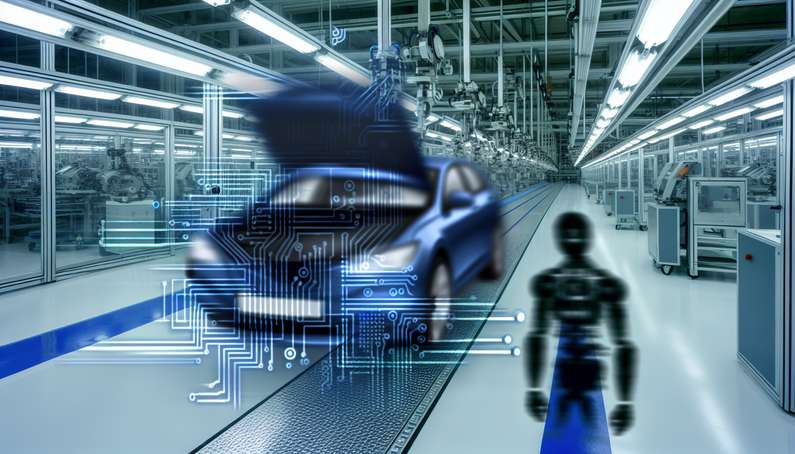
How a Cyberattack Brought Jaguar Land Rover to a Screeching Halt

When Jaguar Land Rover (JLR) was hit by a cyberattack in September 2025, the shockwaves were felt far beyond the company’s own assembly lines. Production at flagship plants ground to a halt, suppliers faced cash flow crises, and the UK government was forced to step in as the disruption threatened the broader economy (Bleeping Computer; CYFIRMA). The timing couldn’t have been worse: the attack coincided with the UK’s “New Plate Day,” a pivotal moment for car sales, leaving dealerships unable to register or deliver vehicles.
The financial toll was staggering, with JLR reporting a quarterly loss of £485 million and cyber-related costs soaring to £196 million (BBC News). The operational chaos was equally severe, as highly automated production lines sat idle and UK car production slumped to its lowest September output since 1952 (BBC News). This incident, attributed to the Scattered Spider Lapsus$ Hunters group, exposed critical vulnerabilities in JLR’s IT infrastructure and underscored the growing risks posed by sophisticated cyber threats in the automotive sector (CYFIRMA).
How a Cyberattack Brought Jaguar Land Rover to a Screeching Halt
Initial Impact and Immediate Response
The cyberattack on Jaguar Land Rover (JLR) was first announced on September 2, 2025, and had an immediate and profound impact on the company’s operations. The attack forced JLR to shut down production at its major plants, including those in Solihull, Wolverhampton, and Halewood, as the company’s IT networks were compromised (Bleeping Computer). This shutdown sent ripples across the supply chain, affecting not only JLR but also its suppliers, who faced severe liquidity issues due to halted operations.
The attack coincided with the UK’s “New Plate Day,” a crucial period for car sales, exacerbating financial losses as dealers were unable to register or deliver vehicles (CYFIRMA). The disruption was so severe that the UK Government had to intervene on September 29, 2025, to mitigate the impact on the broader economy.
Financial Repercussions
The financial impact of the cyberattack on JLR was staggering. The company reported a loss of £485 million before tax and exceptional items for the quarter ending September 30, 2025, compared to a profit of £398 million for the same period the previous year (BBC News). This loss was attributed to the production stoppage and the additional “cyber-related costs” of £196 million, which included the expense of hiring outside consultants and other support in response to the attack.
Furthermore, JLR’s revenues for the quarter fell by 24%, from £6.5 billion the previous year to £4.9 billion. This decline was heavily influenced by the production stoppage, as well as external factors such as US tariffs on cars exported from the UK and Slovakia and the phasing out of certain Jaguar models (BBC News).
Operational Disruptions
The operational disruptions caused by the cyberattack were extensive. JLR’s highly automated production lines were left inoperable throughout September and into early October 2025, leading to a significant reduction in car production. The Society of Motor Manufacturers and Traders (SMMT) reported that UK car production slumped by a quarter in September 2025, marking the lowest number of cars made in any September since 1952 (BBC News).
The attack also disrupted JLR’s supply chain, affecting parts logistics and supplier financing. Despite these challenges, JLR managed to stabilize its operations, with wholesale, parts logistics, and supplier financing fully restored by the end of the quarter (Bleeping Computer).
Long-term Implications
The long-term implications of the cyberattack on JLR are significant. The company had to secure a £1.5 billion UK loan guarantee and new £500 million supplier financing to manage the financial fallout from the attack (TT News). This financial strain has forced JLR to reassess its full-year outlook, although the company has maintained that its investment spending will remain at £18 billion over the five years from FY24 (Bleeping Computer).
The attack also highlighted the vulnerabilities in JLR’s IT and operational systems, as the exposure of internal systems by the Scattered Spider Lapsus$ Hunters group on Telegram demonstrated the risks associated with cyber threats (CYFIRMA). This incident underscores the need for JLR and other companies to invest in robust cybersecurity measures to protect against future attacks.
Recovery and Future Outlook
Despite the challenges posed by the cyberattack, JLR has made significant strides in its recovery efforts. By November 2025, the company reported that its operations were “pretty much back running as normal,” with all plants up and running at or approaching capacity (BBC News). JLR’s chief executive, Adrian Mardell, described the period following the attack as “incredibly difficult” but expressed confidence in the company’s ability to bounce back and continue producing luxury British cars.
Looking ahead, JLR’s parent company, Tata Motors, expects improving demand in India and is managing tariff pressure and weaker sales in China (TT News). The company remains committed to its strategic goals, including the planned re-launch of the Jaguar brand as an all-electric marque, despite the setbacks caused by the cyberattack (BBC News).
In conclusion, the cyberattack on Jaguar Land Rover serves as a stark reminder of the vulnerabilities faced by modern businesses in an increasingly digital world. The incident not only disrupted JLR’s operations but also had a broader impact on the UK economy, highlighting the critical importance of cybersecurity in today’s interconnected global landscape.
Final Thoughts
The Jaguar Land Rover cyberattack is a textbook example of how a single breach can ripple through an entire industry, affecting not just a company’s bottom line but also its partners, customers, and even national economies (Bleeping Computer). JLR’s rapid recovery—restoring operations and stabilizing its supply chain within weeks—demonstrates resilience, but the financial and reputational scars will linger.
This event serves as a wake-up call for all organizations, especially those with complex supply chains and automated operations. As cybercriminals become more sophisticated and leverage emerging technologies, robust cybersecurity isn’t just a technical necessity—it’s a business imperative. The JLR incident highlights the urgent need for proactive investment in digital defenses, cross-industry collaboration, and a culture of cyber awareness to safeguard the future of mobility (CYFIRMA; BBC News).
References
- Bleeping Computer. (2025). Jaguar Land Rover cyberattack cost the company over £220 million. https://www.bleepingcomputer.com/news/security/jaguar-land-rover-cyberattack-cost-the-company-over-220-million/
- CYFIRMA. (2025). Investigation report on Jaguar Land Rover cyberattack. https://www.cyfima.com/research/investigation-report-on-jaguar-land-rover-cyberattack/
- BBC News. (2025). Jaguar Land Rover cyberattack: Financial and operational impact. https://www.bbc.com/news/articles/ckg1w255gy1o
- BBC News. (2025). UK car production slumps after JLR cyberattack. https://www.bbc.com/news/articles/cvgmp1prnv0o
- TT News. (2025). JLR earnings Q3 2025. https://www.ttnews.com/articles/jlr-earnings-q3-2025




